
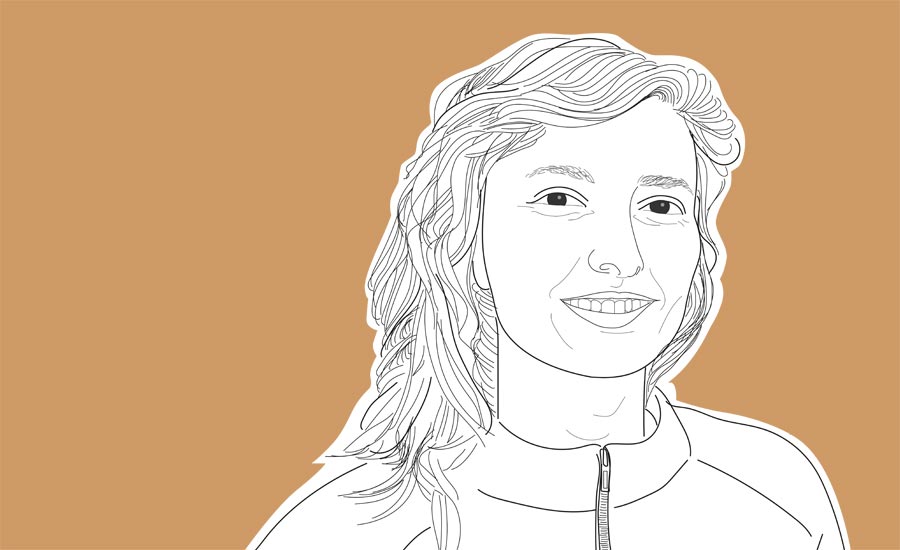
Léa Maitre
She works as Assistant Research Professor at ISGlobal, the Barcelona Institute for Global Health, and coordinates the Exposome Hub initiative, promoting innovation, collaboration and communication about exposomics.
Favorite metabolite
Neurosteroids
Also known as neuroactive steroids, are endogenous or exogenous steroids that rapidly alter neuronal excitability through interaction with ligand-gated ion channels and other cell surface receptors. Learn more in the episode!
Paper discussed in the episode
Multi-omics signatures of the human early life exposome
Léa Maitre, Mariona Bustamante et al. 2022 Nature Communications
The work presented in this publication was part of the HELIX project, coordinated by Martine Vrijheid from 2013 to 2017.
Initiatives discussed in this episode
IHEN – The International Human Exposome Network.
Learn more about IHEN’s exposome ambassadors and about IHEN’s cohort catalogue.
Global Exposome Summit – Event taking place on April 27-29, 2026 in Sitges, Spain and dedicated to fostering international collaborations in exposomics. Organized by IHEN and the Global Exposome Forum.
Sign up for The Metabolomist mailing list to be the first to hear about the latest episodes and news around metabolomics at https://themetabolomist.com
Finally available – Alice’s first book
The STORY principle – A guide to the biological interpretation of metabolomics
Also featuring some of the Metabolomists from Season 1
Available on Amazon and the biocrates webshop
Complement with our episode with Gary Miller on exposomics & 5P medicine.
Episode Transcript
AL: Today I’m very happy to welcome Léa Maitre. Hello Léa, welcome.
LM: Hi Alice.
AL: It’s an opportunity for us to talk again about a topic that I find really, really interesting that is exposomics. We started last year with an interview with Gary Miller. And this year I wanted to talk with you Léa because I think your work has a lot of very interesting multiomic studies combining exposome with omics and especially with metabolomics, which of course is the core of this podcast. But also because we’re running to the last weeks towards a very big event for exposomics. So thank you for joining me on the podcast. And as I usually begin, I would like you to tell us a bit of course where you work, what your work is about, and also how you got to working in the field that you work in.
LM: Great. I’m very excited to be part of this podcast. I’ve been following it. And it’s an honor to be a speaker on it. My trajectory, so I’m now an assistant research professor at ISGlobal in Barcelona. So in ISGlobal we are mainly environmental epidemiologists. But when I arrived in ISGlobal, it’s been exactly 10 years this month. I was the outlier. I arrived as the person with background in metabolomics and a little bit of exposome, as well as at the start. Yeah, when I arrived there, I was the expert in this new field that was being introduced to environmental epidemiologists in the HELIX project. Or at least when the data were coming through from the field work and lab work. Before that, I was at Imperial College London in Jeremy Nicholson and Elaine Holmes’ lab. That’s where I learned about the field of metabolomics for my PhD.
AL: So you learned in one of the leading labs at the time building the field? That must have been an exciting time.
LM: Yes, yeah, yeah, yeah. I was there at the prime time. It was very exciting. Also, you’re seeing the National Phenome Centre being set up. So there was all very exciting times.
AL: And I think it’s a really interesting perspective you bring also, being the metabolomics person, joining a group that is focusing on what was starting to be exposomics, because I guess it’s a relatively new field as well. And what I really liked about HELIX, so the project that you mentioned in the paper that we will talk about is really this integration of the different omics, but not just together, which is what we usually do. But also to integrate them with the exposome measures. Can you tell us about the context in which you apply those omics and exposome measures? Is there a specific disease context or state of life context where you do your research?
LM: Yes, the start of the field of exposome for our group is really to study the early life exposures. Pregnancy and childhood, these are years of higher vulnerability to the environment. We know, for example, during pregnancy, that’s when the environment primed the methylation of the foetus. And actually when we started in this field, there were already studies from the Dutch famine, where we knew that the dietary pattern of the mother can impact the methylation of the children and have lifelong consequences on the chronic disease outcome. And there’s a lot of examples from the animal kingdom too, how environment during pregnancy primed the offspring for metabolic disease. So that was the start. We wanted to study better: are there vertical imprints of the environment in pregnancy and that markers we could follow through childhood? Because the exposome, it’s the study of the cumulative exposures, it’s around the life course, but concretely, when you start, we don’t have to have the life course of individuals. So let’s start the life course of young people because it’s shorter and more feasible to start with.
AL: That’s really an interesting aspect that I didn’t realize until reading the paper that there is a difference in looking at the effects of the exposome in young children versus older people who have accumulated both a lot of exposures and also exposures that you haven’t really monitored over time so you don’t even know what they are. So this is one thing I wanted to discuss with you about the pape: what are these measures of the exposome? Like what are the things that one measures and of course the paper we will discuss has an author’s list that is half a page as usually these papers do because it takes a village to do this kind of studies. But I guess you worked with different groups doing different types of exposome measures. Are there typical measures people would do today that are like the basic things you should look at or for let’s say a metabolomics person who wants to start in that field, would you recommend certain things to look at specifically?
LM: Yeah, so at the start of HELIX project, the vision by the PI Martine Vrijheid was really to go beyond, okay, we say one exposure at the time, but even one class of exposures at the time. We didn’t want to look just at chemicals or just at air pollution. So the idea was to cover multi families of exposure from the physico-social environment to the internal biological futures. We had a big team as you say, so experts in each field, experts in the urban environment, not just air pollution, but also how the streets were connected around the families’ houses and the connectivity by bus. Walkability indexes to chemical exposures. And here chemical exposure, we did cover broad classes using targeted method because at the time we still thought that it’s important to have quantitative measurements of these chemicals for risk assessment. And we covered from pesticides, persistent pollutants, plasticizers, both persistent and non-persistent. And then also at the individual level, we had detailed information on the lifestyle from physical activity, dietary patterns, stress factors, social capital. We were often criticized by sociologists in the exposome that we forgot about the most important determinant of health.
AL: Could be considered a confounder, I guess.
LM: In HELIX, we did ask the families about the social capital; how supported they are, and detailed economic support as well. The most important exposures depend on the health outcome you’re looking at.
AL: I guess it’s like with omics -you want to shoot as large as possible in order to figure out which ones really had an impact in your study. It’s always a difficult question. There is one measure that I found really interesting because at the last exposomics conference I was at, this was a big topic: it’s geospatial methods. Can you say a word about what that is for people who don’t know what geospatial methods are?
LM: Yes, well, the way I usually explain it -because I’m not an expert, is it’s the science of mapping, making high resolution maps. So layers of information that you can tie to the point on the map. So it’s information that can come from satellites or surveys from the city halls. So from the city hall, we had information on the public transports or the land use. So for example, how many facilities and what kind of facilities are present on certain streets? That’s quite a high determinant of how walkable a place is. If you have lots of supermarkets and support facilities around your house, you’re more likely to look to them and have access to them. I would say GIS (geographical information system) is the art of maps where you have information on top of each other.
AL: Thank you. Great, so I think we’re ready now. We’ve set the stage a little bit and we can really look at the paper more specifically. So for people listening at home or wherever you are, the paper is titled “Multi-omics signatures of the human early life exposome”. And you’re the first author on this paper from 2022, but I think it’s such a really beautiful example of what can be done with all those omics that this is really why we chose to still talk about that paper even though your research has progressed and you’ve done many other things since. But it was really, I think, a landmark paper for you, but also for the community to really see how omics work well with exposure measures. So can you tell us a bit about the study design? HELIX is a project that was covering six countries in the EU, I think. You looked at mothers and children. So how did you study them? How did you monitor them? How often did you meet with them or collect samples from them?
LM: Yes, so the study design was really an idea from the PI Martine Vrijheid where at the time they were already working with birth cohorts across Europe and starting to harmonize and cataloging the different cohorts across Europe. And they selected six of these cohorts where the children were around the same age. So they could really do a deep exposure phenotyping, organizing a new follow-up visit of these children at the same time with harmonized protocols in terms of how to capture the external exposures with sensors, for example, on children. Also the biological sample collection to harmonize this, which is very important for the omics and send it to the same labs, not to have batch effects from different labs. So that was the idea to select six of these cohorts, 200 families per cohort where we do a deep phenotyping and exposure screening. One of the other conditions to be part of the HELIX study was to have a biobank with samples from the pregnancy. So the idea is that we would organize a new follow-up of the children, but we would have access to samples from their mothers when they were pregnant. So that would be back from an average of eight years before. So we could do an exposure assessment in terms of chemical exposures, back in the mother samples and in the children’s samples. So we had two time points of exposures.
AL: That’s a really clever design, actually. Use what’s there, but you can start there and then look at what happened a few years later. So what would you say were the main outcomes of this? I know for me it’s really impressive to see how well the exposome and the other omics fit together and the associations that you found there. Was that the main outcome for you? Did you expect that and you were looking for a specific thing?
LM: When we combined all the data together -and that was millions of models because we had all the exposures at two time points; so twice a hundred exposures that were carefully curated. Then the outcomes were all the omics features from methylation, transcriptomic, proteins, metabolites in urine and blood.
AL: Yes, I should have mentioned. Also microRNAs. These are all the omics that were measured there.
LM: Also microRNA. So in total we had half a million omics futures. The bulk of it were the methylation because that was genome-wide. And we looked at pairwise associations between all the exposures and all the omics. I’m co-first author for this paper with Mariona Bustamante who was really putting the expertise from genomics and methylation. And I was putting more the expertise from the metabolomics perspective. I think one person couldn’t interpret these results. And the outcome, actually the first outcome when we crunched all the data, we thought: we need positive controls. What do we expect to find? In Spanish you would say, “si o si”, “yes or yes”. You need to find that to make sure the statistical models work and pick it up. And I thought well, for the children with the metabolomic data we know from past studies, we should find some association between the heavy metals -arsenic, mercury, with fish intake biomarkers. And in metabolomics, that is TMAO. I had found in my PhD another metabolite called homarine. That’s from seafood consumption. So we knew we had to find this association out of the millions of models. This had to come up and pass the statistical thresholds. And we did. So the top association of all these models were arsenic and TMAO. So we thought, okay, that works. The model works.
AL: This is really, it’s really important.
LM: Yeah, the metabolomics works. Then the other positive control we had to find was the association between prenatal smoking exposure -tobacco smoking, the active and passive smoking during pregnancy, with methylation markers. And we did. There was already at the time… the cataloging of methylation association was much more advanced than in the metabolomics community. So we used all these methylation catalogues to check, okay, what are the top exposure association with methylation and do we find that in our study? So that was a good confirmation. And then we had surprises, of course.
AL: There’s one thing that surprised me. It was looking at overall what each omic brings because you often get this question when you do multiomics: is it just putting one omic next to the other or is there an added value to multiomics? and which omic is more interesting or more relevant? And the feeling I got looking at, especially figure two where you show all the associations between the different omics, is that even though the methylation of course covers a lot more features than let’s say metabolomics, for example, proportionally speaking, there were many more associations with metabolomics compared to methylation. Was that also your takeaway?
LM: Yeah, so it depends on the timing. Our takeaway is that methylation as an omic layer is a better record of past exposures and probably better for prenatal exposures. Maybe it’s a better memory of that vulnerable period. So most of the prenatal exposure markers were from the methylation. Metabolomics was the better omic to measure cross associations. So when we measured the exposure and the omics at the same time in childhood, that’s where metabolomics was the strongest. So maybe to capture like co-sources of these exposures. And then there are some exposures, for example, the weather variables, ambient air temperature, humidity, ambient pressure. This type of meteorological variables, they associated with all the omics in childhood. So that was quite interesting. It depends on exposure. Some exposures have more associations with certain omics and some would have an overall multiomic effect that we can measure. I want to also say disclaimer, when we say omics, they were not all covering the same breadth of the biological layer or pathway. So for example, when we say we did metabolomics, at the end, we did targeted in blood and NMR, to semi-targeted in urine. We don’t cover all biological passways. And even methylation, yes, it was genome-wide, but at the end, you do methylation in blood. It’s in the white blood cells. So immune cells. That’s not the methylation of the whole organism. It’s still omics, it’s wide breadth, but at the end, you’re still measuring a certain part of the biological layer.
AL: And this is always something we need to remind either young scientists or people who are new to omics that, I think, it’s in my opinion, because omics started with genomics, and we got the feeling from genomics that we’re covering every single possible base that every omic does this, but most omics actually don’t. So most omics, either because of the technical limitations, look at a fraction of the biology. Sometimes you have to prepare samples and separate based on physico-chemical properties. And then you know you’re going to look at this and not that. There are many reasons why, in the end, we know we’re looking at one fraction of biology. And I think the most important thing is, exactly, as you did it, is to remind people of this and also to know this when you do your own interpretation. So you know the limitations of your tools. And then you know exactly in which part of the field you can play. And then you can start to have fun. And then in the paper, you go and start building networks and looking at associations across the different omics. So this is for me a really interesting question for any multiomic paper: Did you find added value to having different omics? Or if you could do it again and you wanted to save some money, would you only measure one thing? I expect I know the answer to that question, but let’s see.
LM: It depends on the biological question. Several omics layers are good, maybe not all of them. So, for example, if the interest is to study immune response, in which we published a paper last year with a team in INSERM in Grenoble, we then selected some omics layers. So for example to study the immune response to the exposome, here we didn’t include metabolomics. In fact, it didn’t make very much sense, the type of metabolites we had measured were not so related to immune response. So we selected more methylation, the proteins, the cytokines, and the cell counts. And that was the best representation we had of immune response.
AL: But maybe a few years later, you would consider measuring lipidomics?
LM: Yes, of course.
AL: As the knowledge evolves, then you also change the perception you have of the different omics and what they can bring. I think this is the really fascinating thing in the field. Sorry, I didn’t mean to interrupt you.
LM: Yeah, yeah, no, of course, the eicosanoids, and other metabolites to the immune response. But with what we had, the data we had, we didn’t have the relevant metabolites. For example, all the papers, more focused on the, we had a paper on Mediterranean diet and ultra-processed food. Then the metabolomics we had was very relevant, to better refine the dietary intake of the population.
AL: But I found it really interesting in this study that all the omic layers had showed some response, for example, to the meteorological circumstance. So I think this is my view, at least, that especially for omics that move. That was also an interesting thing that you didn’t include genomics in that study. I can think of a reason why. But can you explain why there is no genomics in this paper?
LM: Well, we wanted to look at biological imprint of the exposure and we selected omics that were likely to change. But we did have genome data afterwards later in these children. And there are papers using the genome afterwards. Some parts of the genome can change with environmental exposures, but that was not the primary question.
AL: Sure. But I think it really depends on the interpretation you’re trying to make or the questions you’re trying to answer. I think it’s the beauty of all the omics that you chose there that they are flexible. They are changing based on the environment. That’s exactly why they’re interesting here. Maybe to conclude on that paper, I mean, there would be so many things to say, but I always like to ask the guests if there was something that was particularly difficult in that study. So I mean, it could be like getting the money or things like this. But maybe you were not involved at those stages yet, but still like coordinating things, doing the analysis. Is there something that comes to mind that was a challenge and that you learn to solve there and where you want to share? Yeah. Yeah, it was difficult. It was to summarize the results. Like to pick what are we going to talk about. We had a thousand hits. So how to make sense of it, how to visualize it, how to make a story out of it. And it took us more than two years.
AL: Wow. And you worked with your co-first author together on this?
LM: Yeah, yeah. And actually, so Mariona is a geneticist from background and I was more coming from metabolomics. So we were not environmental science experts. We also had to learn ourselves like, OK, does it make sense to focus the narrative on that exposure? And we kept going back like, OK, it was that exposure well-measured. Like, or also at these markers robust across. OK, we adjusted for confounders. The confounding structure can be quite strong. And maybe you can just adjust for, for example, fish intake. How do we, for example, the TMAO and arsenic association? Is that really just because of the similar source of this metabolite? Or there is something else? And I think there was something else, because it was such a strong association that also the gut microbiome played a role there. And we have a follow-up paper now with toxicologists to test that. So yeah, the tricky part was interpretation. And making sure these findings were robust. And because epidemiologists, that’s what they were used to. They would focus on papers on one type of environmental association and one type of outcome. And they would try many stratifications of models to discard any confounding. But here when you have a thousand associations, you can’t do this for every single association. So we had to come up with some smart way to test, or for example, BMI of the children that was strongly affecting the association with between the lipids and the persistent chemicals. So what was the conclusion from that? So we spend a lot of time interpreting the results.
AL: Sounds like a lot of work, but it also sounds like a lot of fun.
LM: Yeah. I would like to also spend a few minutes on maybe the follow-up work that you’re doing now. So you stayed in that field of looking at the health of mothers and the health of children using omic tools. So what are your special focuses on the moment, maybe some projects coming up that you want to mention?
LM: Well, you just mentioned the health of the mothers, the health of the children. Well, up to then we only focused on the health of the children. So these birth cohorts, they’ve been designed to look at longitudinal exposure and the impact on child health. And recently, I’ve been very interested in different aspects of child health but in particular neurodevelopment and mental health of the children. So that that was the past few years and looking at markers during the pregnancy of future neurodevelopment of the children. And looking at this, I realized we’re not looking at the health of the mother. And that’s a huge determinant of the child’s health. In particular, when you think of mental health of the child. And when I looked at neurodevelopment, for example, I have a paper on the exposome and neurodevelopment in the HELIX children. And one of the strongest determinants is pre-natal smoking. So tobacco smoking during pregnancy increases the risk of behavioral problems in the child. That’s very strong results across several cohorts. And when I saw this result, I thought: how do you disentangle the mental health or stress factor of the mother from smoking? Or addicted behaviors that may be passed down to the child. For example, pre-natal smoking is also associated with the child’s BMI and obesity issues. But how do you disentangle the addictive personality that can be passed on from the mom and the dad, from the parents to the child? So also we have to study as well the maternal health and maternal mental health. And maybe when we look at the environmental factors affecting the child, we need to look at both -how they affect the mother and the child. Here I keep talking about the mothers but fathers are also very important. But because in this birth cohort, we mainly collected samples from the mothers, we’ve been focusing on the mothers.
So one of the latest projects we’re finishing now was on the steroid metabolome during pregnancy and looking at neurosteroids in particular. And originally, the idea came from my PhD. So some neurosteroids derived from progesterone during pregnancy have been associated with child health. But at the time, there were no human studie,s really. Like there were some theoretical models that were associated in mothers with addiction that they were protecting the fetal brain but these were very small panel studies. So I thought, okay, we have a great opportunity here in our cohort. We have longitudinal data in the children up to adolescence. And we still have these pregnancy samples. So we can do studies over 15 years on how the prenatal metabolism in particular to steroid hormones can affect the neurodevelopment of the children. And we do find, we found some association with some metabolites related to cortisol. And that was very interesting because the same metabolite now we’re seeing that is also associated with the mother’s mental health postpartum. And now mixing different cohorts, we have also now a more recent cohort in Barcelona. It’s called the BISC cohort where we can validate findings. It’s quite nice. Where they have slightly more detailed outcome in the children or a different way to collect the sample that’s a bit better than the older cohort from 15-20 years ago. So now, in our recent paper we’re focusing on that.
AL: And it’s really interesting also because as you were explaining the detail of it, I was thinking, so in the paper we discussed before, like you kind of expanded your network or your fields of collaboration to environmental exposome research. And now it seems like you’re turning more towards or like in addition to that to psychological social science that combined together really gives you the full impact on the health of both the mothers and the children. It’s really, really interesting. And this actually takes us nicely to one of the last points I wanted to discuss with you because in this season, we want to focus on community builders. And so how people who use metabolomics contribute to communities with the metabolomics tools that they bring. So I think you’re a beautiful example of this. As you said, at the beginning you joined the team as the metabolomics person. And then we see through the paper and many other projects that it’s been one of the building blocks of very strong households that are becoming bigger and really involve a lot of different fields and disciplines. So what has been your experience of this community building because you were I think in the heart of one of the main places where the exposome field has been growing. How has this been like for you?
LM: Yeah, it’s been very interesting to be the link between the labs and the epidemiology statistician and also the scientists that are looking more at air pollution or external factors. And the exposome community is still quite diverse. So we knew we have to work together and we have common conferences, but it’s still quite a challenge to all work together towards really assessing the exposome as a whole. And now we’ve been building communities through very structured projects. So both in the US and in Europe, they’ve been initiative to create a community. So in Europe, for example, we had the project IHEN, the International Human Exposome Network. So that’s a coordinated action. We are in the third year of the project. In this network, for example, it’s very interesting because we have people working from, yeah, they’re coming from toxicology, from the epidemiology and also from the infrastructure point of view, they’ve been going with EIRENE and some labs in Czech Republic. So basically now, yeah, we know a future there at least. We know who to ask when we need some more lab work or some more GIS modeling. And some of the institutions can offer everything. So that’s quite rare to have in-house all these specialties. The idea is to map in Europe and in the US, okay, who should we go to for this expertise? And that people are aware when they build a study, when they build a cohort where they get the different expertise. And I think I actually now talking about it. I realized cohort is the common platform for everyone. Because cohort is the start to have samples to have the individual, to have the health outcome measures. You need to have large cohorts and very good biobanks to start to the exposome. So the PIs of the cohorts are very important in this aspect because they bring these different expertises to the cohort.
AL: And I guess more and more these cohorts, when they start to be formed, they involve, they include more and more measures of the exposome, which maybe 20 years ago, were missing or almost nonexistent and now it’s probably growing much more so that you have all that information from the get-go.
LM: Yeah, yeah, actually, when I think about the UK biobank, for example, so some of these cohorts were designed to look at genetic determinants and now they think, “Oh, actually, I should have added exposures,” which are very important determinants of health and they’re doing it at posteriori, enriching the genetic cohorts.
AL: And speaking of thinking about it after also for people who build cohorts now and want to do metabolomics later: don’t just prepare your samples based on wanting to measure genetics. Try to collect at times where you can have more or less coordinated fasting times and not too long time to freezing the samples so that it can be used for proteomics, for metabolomics and so on. But these are the things that the community learns over time.
LM: Yeah, if I can add also on this aspect of sample collection. The protocol we build in exposure research, it’s also related to the urine. The urine sample is still very important to measure non-persistent exposures and even dietary-related compounds and microbiome compounds. Some things cannot be detected in blood. You have to look at urine. And to correctly collect the urine because of this transient metabolite, you should collect repeated urine. So in our cohort, we ask the participant to bring at least day and night urine for five days that we pool and then analyze this weekly pool urine and we found that’s a much better exposure assessment than a spot urine, even morning spot.
AL: Very interesting, thanks. And so as we launch that episode, we’ll be 2 to 3 weeks away from the Global Exposome Summit, which is organized near Barcelona. So I think ISGlobal is a big contributor to the organization. So do you want to say a few words both about what it means to be the organizer this year and also just about that community in general.
LM: Yes, the Global Exposome Summit, it’s really the peak of the IHEN project, together with the American community, NEXUS. We didn’t have really a big conference for this community. So yeah, the idea is to bring the different parts of the community together. And also as part of IHEN, we really wanted to bring exposome to parts of the world that were not focused on exposome or were not organized. So for example, in Asia or South America, they have cohorts and they have environmental focused studies, but they not necessarily linked with each other or they don’t have a hub in their region. So we really wanted to see what were the needs of different global regions and help them if we could build their own community. And that we’ve been doing through an ambassador program and these ambassadors are really helping also with the organization of the summit to be able to reflect what can be done and what are the needs of all the regions of the world because yeah, we always study determinants of health where it’s not the most needed in Europe and US, we leave out other regions of the world where, for example, if you think in South America, the mining and all the chemical exposures that they don’t have necessarily resources to study or the expertise, connect also within these regions and helping them.
AL: Is there a place where people can learn about this ambassador program? A link that we can put on the page of the episode so people can learn more about it?
LM: Yeah, well, in the website from the IHEN project, we have news about it. We’re also inviting, for example, one very concrete way to bring this community together and maybe produce better science by covering larger parts of the world. It’s this cohort catalogue that my colleague Augusto is leading. So we’re trying to reference and map of the cohorts in which exposome research can be done. So maybe these cohorts, as I said, they were not designed to do exposome but at the end they’ve been adding layers of biobanking and environmental exposures. And now we’re starting to have a very nice map for the whole world of cohorts to study. That then can be used to screen for researchers, okay, we want to study air pollution and blood pressure. Where can we do that in the world? Not just London, Los Angeles.
AL: That’s a great resource, yeah. We’ll also put a link to that. Thank you very much. So I think we are at the time for our final and usual question. What is your favorite metabolite? And why? Could you give it some thought?
LM: Yes. Yeah, I would say throughout my career, I’ve been really interested in these neurosteroids metabolite. I think it’s quite fascinating if we can measure in urine a metabolite that would affect the fetal brain, like female metabolites in the mother during pregnancy that can determine the child’s fetal development. Yeah, that was one of my main research questions in the past years. Now with the results we’re having some surprises. It’s mainly some of the cortisol metabolites and not as much the progesterone metabolites that affect the child’s brain. But yeah, I find these steroid metabolites quite fascinating and they’re also good sensors of endocrine disruptors’ impact. There’s been a lot of studies on endocrine disruptors, how they affect the risk of metabolic disease, obesity, diabetes. But people don’t measure the impact on hormone directly, which I was quite surprised when I started in this field. One of the reasons, for example, in females, is that our hormone cycle is changing a lot throughout the month. So it’s hard to study hormonal disruption in women. But in pregnancy, it’s more stable. So that’s where we started. We thought at least it doesn’t matter which time of the month you are. There’s the time of pregnancy, but it’s a bit more easy to harmonize across the population. So yeah, I would say these hormonal perturbations are very interesting.
AL: Thank you. Thank you very much. A very interesting group of metabolites. Wonderful. Then I think we’ve reached the end of the episode. Thank you, Léa, for exchanging, for also teaching us a lot about exposome and also very efficient ways of collecting urine for exposome research. Thank you for that. And so I look forward to seeing more of your research going out in the world and also meeting you in person, I guess, in Barcelona or in Sitges for the Global Exposome Summit. Thank you very much for your participation in the podcast.
LM: Thank you, Alice.